

Cotton vs. Modal Boxer Briefs: A B2B Sourcing Guide for Importers
Cotton vs. Modal Boxer Briefs: A B2B Sourcing Guide for Importers
For retail brands and importers, the choice between Cotton and Modal for a boxer brief line goes beyond simple aesthetics. It is a strategic supply chain decision that directly impacts your profit margins, customer return rates, and long-term brand reputation.
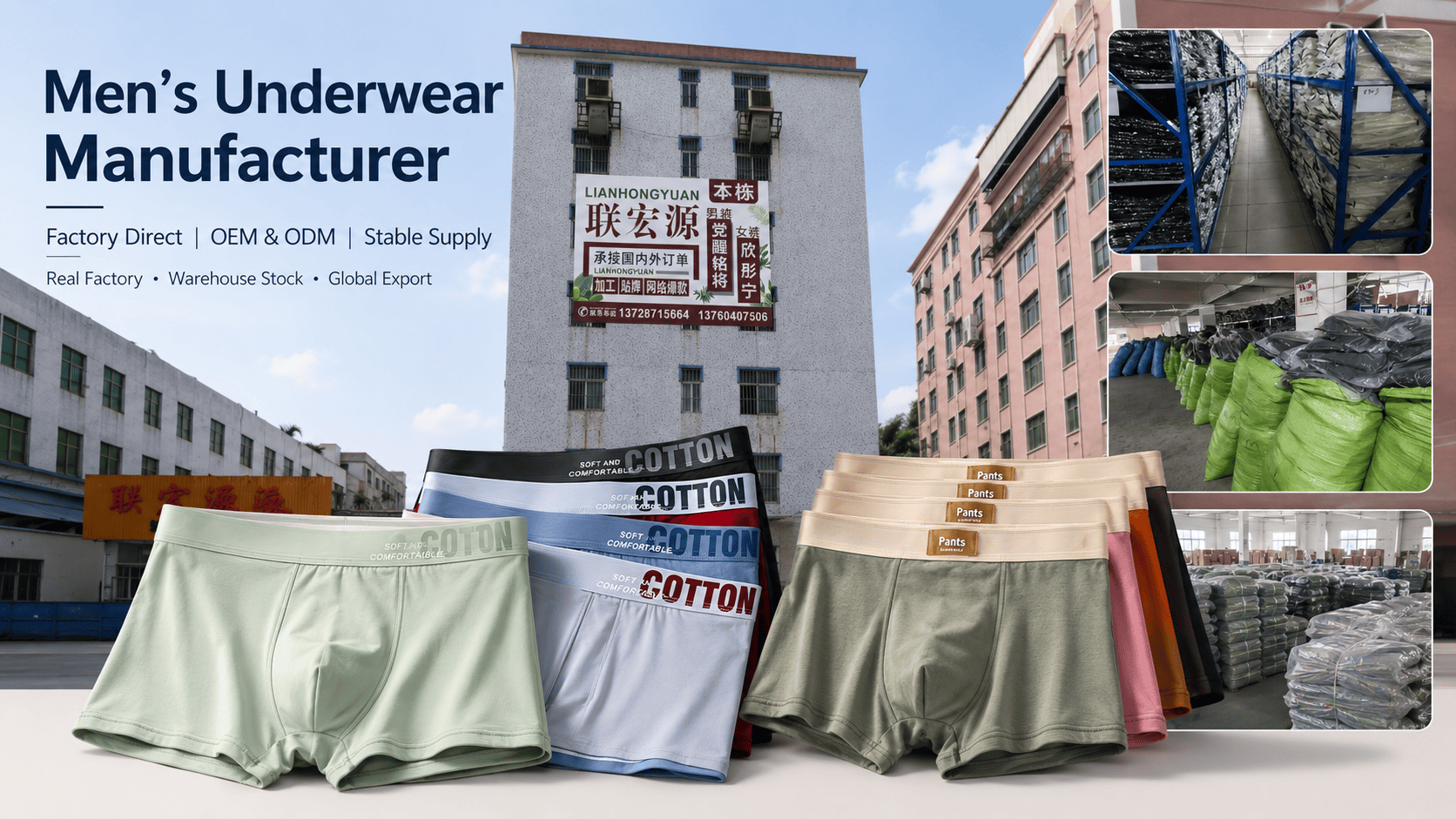
At Lian Hong Yuan, we specialize in men’s underwear manufacturing. We frequently work with brand owners who need to balance competitive production costs with rising consumer expectations for quality. This guide breaks down the material properties and manufacturing considerations to help you make an informed procurement decision.
Material Comparison Matrix: Cotton vs. Modal
| Feature | Cotton | Modal |
|---|---|---|
| Durability | High and robust | Medium, requires refined processing |
| Moisture Wicking | Moderate | High and excellent |
| Market Positioning | Mass market and everyday wear | Premium and luxury positioning |
| Production Cost | Lower | Higher |
Sourcing Insight: In European markets, Modal is often preferred for its luxury hand-feel, which justifies a higher retail price point. Conversely, for markets in the Middle East, high-quality Cotton blends are often favored for their durability and breathability in arid climates.
Factory-Direct Advantage: By working directly with a manufacturer like Lian Hong Yuan, you bypass the markups of trading companies. We ensure quality consistency through standardized AQL inspections and high-speed circular knitting machinery, mitigating the inconsistencies often found in outsourced production.
The ROI of Material Selection in Underwear Manufacturing
Why Fabric Choice Determines Your Retail Margin
Fabric selection is the most significant variable in your Cost of Goods Sold, also known as COGS. Cotton allows for high-volume, mass-market pricing strategies, making it the bedrock of replenishment-heavy business models. Modal, a bio-based fiber, commands a higher retail price point due to its superior softness and drape. When selecting your material, align the fiber choice with your target consumer’s price sensitivity and performance expectations.
Balancing Consumer Demand and Production Costs
Importers often face a trade-off: Cotton offers reliability and lower production costs, while Modal offers a competitive advantage in the luxury segment. The most successful brands in our portfolio often utilize a hybrid strategy: sourcing high-durability Cotton for everyday basics and Modal-rich blends for premium, high-margin collections.
Technical Performance: GSM, Durability, and Shrinkage
When sourcing, focus on the Grams per Square Meter, or GSM, rather than just the fiber name.
- Cotton: A standard 160-180 GSM cotton-elastane blend offers excellent shape retention and durability. It is the industry standard for daily wear.
- Modal: Because Modal fibers are finer, they require careful handling during the circular knitting process to prevent pilling or loss of elasticity. A high-quality Modal blend typically requires a slightly higher GSM to ensure opacity and longevity.
Not sure which material fits your market? Speak with our production specialists to align your material choice with your target regional market.
The Middleman Gap: Why Factory-Direct Sourcing Wins
Eliminating Communication Gaps
Trading companies often act as a black box between the buyer and the factory floor. They may not fully grasp technical requirements like specific knitting tensions or fiber composition percentages, which can lead to discrepancies in the final product. As a direct Men’s Underwear Factory, Lian Hong Yuan maintains a direct line of communication, ensuring your technical specifications are met precisely.
Avoiding Quality Inconsistency
Quality drift, where the first batch is excellent but subsequent batches vary, is one of the most common complaints importers face when moving away from middlemen. By working directly with the manufacturing facility, you gain oversight of the production process, ensuring that yarn quality, dyeing consistency, and sewing standards remain uniform across every shipment.
Manufacturing Standards and Quality Control
Precision in Circular Knitting
Quality starts at the loom. Our facility utilizes high-speed circular knitting machines calibrated specifically for high-stretch underwear fabrics. This machinery ensures consistent tension across the fabric roll, which is vital for preventing garment distortion after multiple washes.
QC Protocols: AQL Standards
We operate under strict Acceptance Quality Limit standards. Our QC process involves three stages:
- Raw Material Inspection: Testing yarn strength and color fastness before knitting.
- In-Line Inspection: Monitoring fabric tension and sewing alignment during production.
- Final Audit: Rigorous checking of finished boxer briefs for stitching integrity, labeling accuracy, and packaging compliance before shipment.
Sourcing Logistics: MOQs and Customization
Private Label Options
We offer comprehensive private label services. Whether you require custom heat-transfer labels, woven waistbands, or specific retail-ready packaging such as boxes, polybags, or eco-friendly alternatives, our production line is equipped to handle these requirements.
Sample Requests
We understand that before placing a bulk order, you need to verify the hand-feel and durability. We recommend requesting a fabric swatch kit or a prototype sample to test our production quality firsthand.
Conclusion: Partnering with a Manufacturer
In the competitive men’s underwear market, your supply chain partner is as important as your product design. By choosing a factory-direct approach, you bypass the communication gaps and cost overheads of the middleman. At Lian Hong Yuan, we provide the technical expertise and manufacturing consistency required to scale your brand.
FAQ
Which fabric is better for the European market, Cotton or Modal?
European consumers increasingly prioritize luxury hand-feel and sustainable materials. Modal is generally the preferred choice for premium, higher-margin product lines in Europe.
How does Lian Hong Yuan ensure fabric consistency across large production batches?
We achieve consistency through the use of standardized, high-speed circular knitting machinery and a multi-stage AQL inspection protocol that monitors tension and dye uniformity throughout the production run.
What are the MOQ requirements for custom boxer brief production?
MOQs vary based on fabric selection and customization requirements, such as custom waistband weaving. Please contact our team with your specific project details for an accurate quote.
Can you provide a fabric GSM comparison for these materials?
Yes. We typically recommend 160-180 GSM for Cotton-Elastane blends and 170-190 GSM for Modal blends to ensure optimal opacity, durability, and comfort.
How does factory-direct sourcing impact my final retail profit margins?
Factory-direct sourcing eliminates the commissions and overhead costs associated with trading companies, allowing you to either increase your profit margins or invest those savings into higher-quality materials.
What customization options are available for private label packaging?
We offer full private label support, including custom heat-transfer branding, woven waistbands, and various retail-ready packaging solutions designed to withstand international shipping.
Ready to Refine Your Sourcing Strategy?
If you are looking for a reliable manufacturing partner to scale your underwear brand, let’s discuss your project. We can provide fabric swatch kits and production samples so you can evaluate our quality standards firsthand.
Website: https://www.lhongyuan.com
WhatsApp: +86 13728808434
Why do seams rip in men's boxer briefs and how can buyers prevent this defect?
How to implement effective quality control for bulk orders of men's boxer briefs?
Should B2B importers choose Cotton or Modal for boxer brief manufacturing?
Cotton is usually better for high-volume, durable, mass-market boxer briefs, while Modal is better for premium boxer briefs that require a softer hand-feel and higher retail positioning. For B2B importers, the best material choice depends on market positioning, target price, GSM, shrinkage control, and factory quality consistency.